
To Fear or Not to Fear?
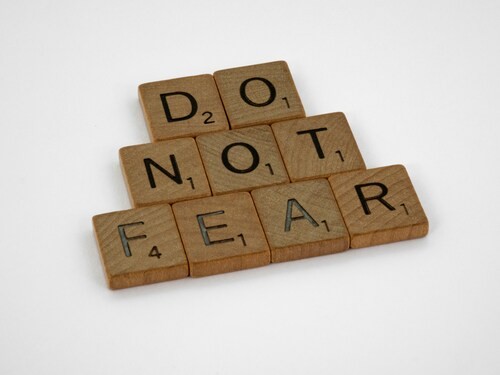
Fear is something I think all of us wrestle with at one point or another. As a young mom, I’ve realized fear can show up in so many ways. Sometimes it’s fear over our children, fear about the future, fear of failure, or even fear of what other people think about us. Some fears are healthy and protective, but others slowly steal our peace and keep us from fully trusting God.
The Bible talks a lot about fear, but interestingly, it teaches both that there are things we should fear and things we should not fear. So how do we know the difference?
One of the most repeated commands in Scripture is “Do not be afraid.” God says it over and over because He knows how easily fear can take hold of our hearts. Isaiah 41:10 says, “So do not fear, for I am with you; do not be dismayed, for I am your God.” Fear becomes unhealthy when it causes us to forget God’s presence or doubt His care for us.
But then we read verses like Proverbs 9:10: “The fear of the Lord is the beginning of wisdom.” At first, that can sound confusing. If God keeps telling us not to fear, why does He also tell us to fear Him?
The difference is found in who or what we fear.
The Bible warns us not to live in fear of people, opinions, uncertainty, or the future. Yet it encourages us to fear the Lord. The “fear of the Lord” is not about being terrified of God. In Scripture, the Hebrew word often used is yirah, which can also mean awe, reverence, and deep respect. It means recognizing God for who He truly is: holy, powerful, loving, and completely worthy of our trust.
Fear of man, however, has the opposite effect. Proverbs 29:25 says, “Fear of man will prove to be a snare, but whoever trusts in the Lord is kept safe.” When we become too focused on what people think of us, it can keep us stuck and spiritually timid.
I remember being at a moms’ gathering at church and feeling the Lord nudge me to encourage another woman who looked overwhelmed and exhausted. I wanted to say something, but immediately I started overthinking it. What if I sounded awkward? What if she thought I was strange? I almost talked myself out of it completely.
Finally, I walked over and simply told her I felt led to remind her that God saw her and cared about what she was carrying. Her eyes instantly filled with tears, and she told me she had been having such a hard week and desperately needed encouragement.
That moment reminded me how often fear of people keeps us from obedience. We become so concerned with how we are perceived that we forget whose opinion matters most.
Jesus said in Matthew 10:28, “Do not be afraid of those who kill the body but cannot kill the soul. Rather, be afraid of the One who can destroy both soul and body in hell.” Jesus was teaching that reverence for God should outweigh every earthly fear.
The more we grow in awe of God, the less power other fears begin to have over us. When we truly understand who He is, we can walk in freedom instead of constantly worrying about what everyone else thinks.
So maybe the real question is not simply, “Should I fear?” but rather, “Who am I fearing most?”
Blessings,
Melissa Gutierrez
The Bible talks a lot about fear, but interestingly, it teaches both that there are things we should fear and things we should not fear. So how do we know the difference?
One of the most repeated commands in Scripture is “Do not be afraid.” God says it over and over because He knows how easily fear can take hold of our hearts. Isaiah 41:10 says, “So do not fear, for I am with you; do not be dismayed, for I am your God.” Fear becomes unhealthy when it causes us to forget God’s presence or doubt His care for us.
But then we read verses like Proverbs 9:10: “The fear of the Lord is the beginning of wisdom.” At first, that can sound confusing. If God keeps telling us not to fear, why does He also tell us to fear Him?
The difference is found in who or what we fear.
The Bible warns us not to live in fear of people, opinions, uncertainty, or the future. Yet it encourages us to fear the Lord. The “fear of the Lord” is not about being terrified of God. In Scripture, the Hebrew word often used is yirah, which can also mean awe, reverence, and deep respect. It means recognizing God for who He truly is: holy, powerful, loving, and completely worthy of our trust.
Fear of man, however, has the opposite effect. Proverbs 29:25 says, “Fear of man will prove to be a snare, but whoever trusts in the Lord is kept safe.” When we become too focused on what people think of us, it can keep us stuck and spiritually timid.
I remember being at a moms’ gathering at church and feeling the Lord nudge me to encourage another woman who looked overwhelmed and exhausted. I wanted to say something, but immediately I started overthinking it. What if I sounded awkward? What if she thought I was strange? I almost talked myself out of it completely.
Finally, I walked over and simply told her I felt led to remind her that God saw her and cared about what she was carrying. Her eyes instantly filled with tears, and she told me she had been having such a hard week and desperately needed encouragement.
That moment reminded me how often fear of people keeps us from obedience. We become so concerned with how we are perceived that we forget whose opinion matters most.
Jesus said in Matthew 10:28, “Do not be afraid of those who kill the body but cannot kill the soul. Rather, be afraid of the One who can destroy both soul and body in hell.” Jesus was teaching that reverence for God should outweigh every earthly fear.
The more we grow in awe of God, the less power other fears begin to have over us. When we truly understand who He is, we can walk in freedom instead of constantly worrying about what everyone else thinks.
So maybe the real question is not simply, “Should I fear?” but rather, “Who am I fearing most?”
Blessings,
Melissa Gutierrez
No Comments